Trailer Theft in the United States (Forecast 2030)

Executive Summary
Trailer theft across the United States is a widespread, structurally underreported crime that touches individual owners, contractors, fleet operators, and the wider national supply chain. Even as overall motor vehicle theft has fallen sharply in recent years, trailer and cargo theft have gone the other way, hitting record levels in 2024 and drawing Congressional scrutiny for the first time. The numbers are sobering. More than 100,000 utility trailers are stolen every year with recovery rates often below 30 percent¹, cargo theft climbed to 3,625 documented cases in 2024 representing $454.9 million in losses⁵, and the trucking industry alone carries an estimated $6.6 billion in annual theft-related costs⁷.
What defines the current picture is the split between general vehicle theft and trailer-specific theft. Across the country, motor vehicle theft dropped 17 percent in 2024 and another 23 percent in the first half of 2025, the steepest decline in four decades². Yet cargo and trailer theft kept climbing over the same stretch, with the average number of cargo thefts per day rising from 4.06 in 2023 to 6.07 in 2024⁹. That split points to weaknesses specific to trailers, including thin registration requirements, low-tech security, and fragmented tracking infrastructure, which together leave trailers unusually easy to steal even as broader theft deterrents get better.
The financial hit from trailer theft reaches well past the value of the stolen assets themselves. Homeland Security Investigations puts the total annual cost of cargo theft between $15 billion and $35 billion once you factor in supply chain disruption, insurance costs, investigation expenses, and downstream economic effects⁸. Individual motor carriers lose an average of more than $520,000 per year, while logistics service providers face average annual theft losses above $1.84 million⁷. For travel trailer and RV owners, average insurance claims run about $28,000 per incident and take 30 percent longer to settle than standard vehicle theft claims¹¹.
Geographically, trailer theft clusters tightly. California, Texas, and Illinois made up 46 percent of all cargo theft in 2024, and Dallas County alone saw a 78 percent year-over-year jump in reported incidents⁶. On the regulatory side, 12 U.S. states have no registration requirement for small utility trailers, a systemic weakness that lets stolen trailers get re-titled through homemade trailer applications and assigned fresh vehicle identification numbers with little scrutiny²⁰. Congressional attention peaked in July 2025 when the Senate Judiciary Committee held hearings on organized theft networks, where the National Insurance Crime Bureau cited the $35 billion annual impact figure in formal testimony⁸.
This report looks at the full scope of trailer theft across the United States, covering utility trailers, cargo and commercial trailers, travel trailers and recreational vehicles, and equipment trailers. It offers a data-driven read on historical trends, current scale and financial impact, geographic spread, theft methods, recovery dynamics, and the legislative and technological landscape shaping the outlook through 2030.
U.S. Trailer Theft Trend Analysis, 2019 to 2025
Pre-2020 Baseline
Before 2020, trailer theft in the United States sat as a persistent but mostly invisible slice of the wider motor vehicle theft category. The FBI's Uniform Crime Reports, the leading federal data source, file trailers under the catch-all label of "other motor vehicles," which made up roughly 8 percent of all vehicle thefts nationally¹⁸. That classification hides the true volume of trailer-specific theft and limits how well law enforcement, policymakers, and industry can assess the problem on its own.
In 2019, the nationwide motor vehicle theft rate stood at 199.4 incidents per 100,000 residents, a relatively steady period after years of gradual decline¹⁸. Within that baseline, trailer theft ran on opportunistic crimes aimed at utility trailers, construction equipment trailers, and travel trailers parked in unsecured spots. Recovery rates were structurally low, reflecting how easily trailers move across jurisdictions and how little owners invested in tracking. The National Equipment Register and NICB reported steady annual losses of about $400 million for heavy equipment and trailer theft combined, with fewer than 25 percent of stolen items ever recovered¹⁵.
The commercial freight sector saw cargo theft at a lower but meaningful baseline. Industry estimates put daily cargo theft below four incidents on average, with losses concentrated in high-value shipments moving through known corridor states. Distribution and logistics infrastructure was already flagged as vulnerable, but the problem had not yet reached the institutional attention it would draw in later years.
COVID-Era Disruption and the Surge in Theft Activity
The arrival of the COVID-19 pandemic in 2020 disrupted supply chains, displaced economic activity, and created conditions that amplified theft across several trailer categories. Motor vehicle theft nationally rose sharply, climbing from 199.4 per 100,000 in 2019 to 283.5 per 100,000 by 2023, a 42 percent increase over four years¹⁸. By 2023, over 1,020,729 vehicles were reported stolen in the United States, a 1 percent increase over the prior year and a continuation of a trend that had been accelerating since 2020¹.
Inside that broader surge, cargo and trailer theft rose even faster. Supply chain bottlenecks, inventory shortages, and higher commodity prices made stolen goods more valuable and easier to resell. Cargo theft incidents tracked by Verisk CargoNet climbed from 2,852 in 2023 to 3,625 in 2024, a 27 percent year-over-year increase, with total documented losses hitting $454.9 million⁵. The estimated average value per cargo theft rose to $202,364 in 2024, up from $187,895 the year before⁶. During the first quarter of 2024 alone, CargoNet estimated $154.6 million worth of goods were stolen, with the average stolen shipment valued at $281,757¹⁶.
RV and travel trailer theft moved along a similar path. Roughly 28,000 RVs were stolen nationwide in 2022, producing losses above $600 million. By 2024, that figure had trended up to over 30,000 reported stolen units, with towable travel trailers making up about 82 percent of all RV theft incidents¹¹. The stretch from 2016 to 2022 saw a 30 percent cumulative increase in RV thefts, with California, Texas, and Florida consistently ranking as the top three states for this category²³.
Post-Pandemic Divergence, Vehicle Theft Down and Trailer Theft Up
Starting in 2024, the United States saw a historic split in theft trends. Overall motor vehicle theft fell sharply, dropping 17 percent from 2023 to 850,708 stolen vehicles, the largest annual decline in 40 years and the first time since 2021 that the figure fell below one million². The FBI's UCR Summary confirmed an estimated 18.6 percent decrease in motor vehicle theft from 2023 to 2024¹⁹. That positive trend carried into the first half of 2025, with vehicle thefts falling another 23 percent year-over-year and the national theft rate dropping from 126.62 to 97.33 per 100,000 residents¹⁷.
Cargo and trailer theft, though, did not follow that downward line. Overhaul recorded 2,217 confirmed cargo thefts in the U.S. in 2024, a 49 percent jump in volume over 2023. More striking, the company estimates the actual number of major theft incidents topped 13,500 for the year, which underscores the scale of underreporting that marks this crime category⁹. The average daily frequency of cargo theft rose from 4.06 incidents per day in 2023 to 6.07 in 2024, with nearly 60 percent of annual theft events packed into the second half of the year⁹.
This split shows that the factors pushing down general vehicle theft, including better vehicle immobilizer technology, law enforcement task forces, and consumer awareness, have not carried over to trailers. Trailers stay structurally more vulnerable because of their portability, the patchwork of registration and titling rules across states, and the relatively low uptake of GPS tracking and advanced locking systems among individual owners and small operators.
Scale and Financial Impact
Annual Theft Volume and Documented Losses
The financial impact of trailer and cargo theft in the United States works on several levels, from individual incidents to industry-wide systemic costs. At the incident level, documented cargo theft reached $454.9 million across 3,625 reported cases in 2024⁵. The average stolen cargo shipment was valued at $202,364, reflecting both the rising value of goods in transit and the tendency for organized theft networks to chase higher-value loads⁶. Utility trailers, which often carry construction equipment, landscaping tools, or personal property, account for over 100,000 thefts annually, with total supply chain losses now above $10 billion per year once direct and indirect costs are included³.
At the industry level, the American Transportation Research Institute pegs annual cargo theft costs at $6.6 billion, equal to more than $18 million per day⁷. That figure covers direct product losses, service disruptions, insurance costs, investigation expenses, and the operational overhead of putting preventive measures in place. Individual motor carriers absorb average annual losses above $520,000, while logistics service providers face average losses of more than $1.84 million per year⁷.
The broadest estimate comes from Homeland Security Investigations, which places total annual cargo theft costs between $15 billion and $35 billion. The upper end of that range was cited by the National Insurance Crime Bureau in testimony before the U.S. Senate Judiciary Committee in July 2025, reflecting the federal government's recognition that documented losses represent only a slice of the true economic impact⁸. The NICB further noted that "six to eight cargo theft incidents occur every day on average, each carrying an average loss value exceeding $200,000"⁸.
Recovery Rates and Insurance Dynamics
Recovery rates for stolen trailers and cargo stay exceptionally low, which piles more financial pressure on victims and insurers. Across all cargo categories, roughly 74 percent of stolen goods are never recovered⁷. For trailers and equipment specifically, recovery rates without proactive measures such as GPS tracking can drop as low as about 7 percent⁴. The National Equipment Register reports that fewer than 25 percent of stolen construction equipment and associated trailers ever make it back to their owners¹⁵.
Insurance dynamics add to the cost. The average insurance claim for a stolen travel trailer is about $28,000, and RV theft claims usually take 30 percent longer to settle than standard automobile theft claims because of the complexity of valuation, the difficulty of verifying total loss, and the lower odds of recovery¹². For commercial operators, rising theft frequency feeds straight into higher premiums, larger deductibles, and tighter coverage terms, building a compounding cost cycle that lands hardest on small and mid-sized carriers.
Segmentation by Trailer Type
Utility Trailers
Utility trailers are the most frequently stolen and least frequently recovered trailer category in the United States. More than 100,000 utility trailers are reportedly stolen each year, which makes them the single largest category by volume³. Recovery rates for this segment run structurally low, below 30 percent on average and as low as 7 percent when owners lack GPS tracking or comparable recovery technology⁴.
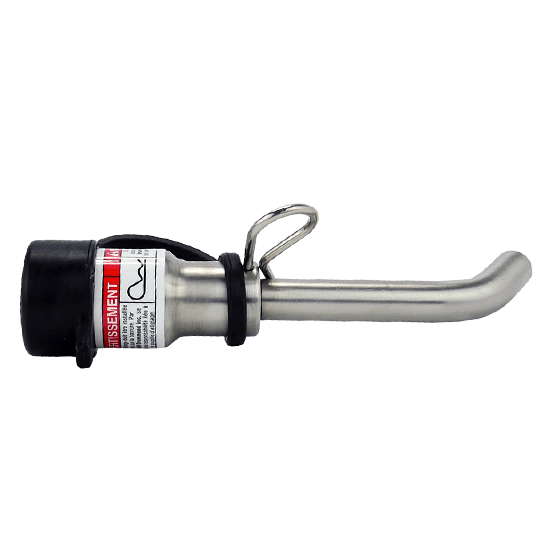
Several traits make utility trailers uniquely exposed. They are physically small, easily towed by standard passenger vehicles, and often stored in unsecured places such as driveways, construction sites, and open lots. Most critically, 12 U.S. states keep no registration requirement for small utility trailers, letting thieves re-title stolen units through homemade trailer applications and pull new vehicle identification numbers with little documentation or verification²⁰. That regulatory gap creates a systemic loophole that effectively launders stolen trailers back into legal circulation. A quality trailer coupler lock is one of the simplest ways owners can close off the easiest point of attack.
The contents carried by utility trailers, including construction tools, landscaping equipment, and trade materials, often exceed the value of the trailer itself. This dual-loss dynamic means a single utility trailer theft can cause financial harm well past the replacement cost of the trailer, disrupting business operations and project timelines for contractors and tradespeople who depend on their gear every day.
Cargo and Commercial Trailers
Cargo and commercial trailers are the focus of the most heavily documented theft data, driven by the scale of losses and the involvement of organized criminal networks. In 2024, Verisk CargoNet recorded 3,625 cargo theft incidents with $454.9 million in documented losses⁵. Overhaul's parallel tracking captured 2,217 confirmed thefts but estimated the actual number topped 13,500, highlighting a massive underreporting gap between documented and actual theft activity⁹.
Over 85 percent of all cargo theft in North America involves trucks and trailers, according to the Transported Asset Protection Association's Incident Information System¹⁰. Theft methods in this segment have changed a lot. Pilferage, the partial theft of goods from a trailer without taking the whole unit, now accounts for 52 percent of all recorded cargo thefts. Full truckload theft represents 22 percent of incidents, facility theft 14 percent, deceptive pickups 7 percent, and hijackings 3 percent²³. The dominance of pilferage tells us that many thefts happen while trailers sit parked and unattended at yards, rest stops, or distribution centers, rather than through forced seizure. Operators moving high-value freight increasingly pair a hardened commercial trailer lock with seal verification to counter this pattern.
Organized theft networks have also pushed into rail-based cargo, costing major U.S. railroads more than $100 million in 2024 according to the Association of American Railroads. Stolen goods are increasingly exported internationally rather than fenced domestically, which adds a geopolitical dimension to the enforcement challenge²¹.
Travel Trailers and Recreational Vehicles
Travel trailers and RVs form a distinct theft segment marked by high unit values, emotional attachment, and specific vulnerability patterns. About 30,000 RVs were reported stolen in 2024, trending up from 28,000 in 2022. Towable travel trailers account for roughly 82 percent of these incidents, making them the overwhelmingly dominant subcategory within RV theft¹¹. From 2016 to 2022, RV thefts rose 30 percent nationally¹³.
Theft location data shows that nearly 41 percent of all RV and trailer thefts occur at storage facilities, followed by businesses and private residences¹⁴. The concentration at storage locations points to a vulnerability gap. Owners often assume that designated storage facilities provide adequate security, when in reality many lack surveillance, perimeter controls, or on-site personnel able to deter theft. On method, 58 percent of RV theft cases involve thieves getting in by smashing a window, which shows that physical security stays basic in many cases²². For owners who tow their unit, an RV trailer lock on the coupler adds a barrier that opportunistic thieves cannot bypass in seconds.
California, Texas, and Florida are the top three states for RV theft, in line with their large populations, warm climates that support year-round RV use, and extensive storage facility networks¹³. The average insurance claim of $28,000 per stolen travel trailer, together with settlement timelines that run 30 percent longer than standard auto theft claims, creates a heavy financial and administrative burden for affected owners¹².
Equipment Trailers
Equipment trailers, commonly used to move construction machinery, agricultural implements, and industrial tools, form a smaller but financially significant theft segment. The National Equipment Register and NICB report combined annual losses of about $400 million for heavy equipment and trailer theft, with recovery rates below 25 percent¹⁵. These trailers are frequently targeted at construction sites, agricultural properties, and industrial yards where security infrastructure is minimal and equipment may sit idle for long stretches between use.
The value proposition for thieves in this segment is compounded by the resale market for heavy equipment, which runs through less regulated channels than consumer goods. Stolen equipment and trailers can be moved across state lines and resold through informal networks, online marketplaces, or export channels with relatively low risk of detection, especially in states where registration and titling requirements are weak or absent.
Geographic Hotspots and Regional Analysis
State-Level Concentration
Trailer and cargo theft in the United States clusters heavily in a small number of states. California, Texas, and Illinois made up 46 percent of all cargo theft nationally in 2024⁶. These three states combine large populations, extensive freight corridors, major port infrastructure, and high volumes of warehousing and distribution, all of which create dense target environments for organized theft. Dallas County, Texas, saw a particularly sharp spike, with cargo theft incidents rising 78 percent year-over-year⁶.
For RV and travel trailer theft, California, Texas, and Florida consistently rank as the top three states by volume¹³. Their positioning reflects a mix of large RV ownership bases, extensive storage networks, warm climates that stretch usage seasons, and, in the case of Florida and Texas, proximity to international borders and ports that ease cross-border movement of stolen goods. The overlap between cargo theft hotspots and RV theft hotspots in California and Texas suggests shared infrastructure weaknesses and possibly overlapping criminal networks.
Seasonal and Temporal Patterns
Trailer theft shows pronounced seasonal patterns. Overhaul's 2024 data showed that nearly 60 percent of annual cargo theft events happened in the second half of the year, with activity peaking during the holiday shipping season when cargo volumes run highest and warehouse yards are most congested⁹. That pattern lines up with broader retail and logistics cycles, as heavier freight movement creates more chances for theft at transfer points, distribution centers, and overnight parking spots.
For utility and travel trailers, theft risk climbs during spring and summer when trailers are more often in use, in transit, and stored at seasonal locations. Construction activity peaks in warmer months, which puts utility and equipment trailers at raised risk. Travel trailers face heightened exposure during vacation seasons when they park at campgrounds, storage lots, and temporary locations away from owners' primary residences.
The Registration Gap, a Structural Vulnerability
One of the biggest geographic factors in trailer theft is the patchwork of state registration requirements. Twelve U.S. states keep no registration requirement for small utility trailers, a structural weakness that organized and opportunistic thieves exploit routinely²⁰. In these states, stolen trailers can be re-titled using homemade trailer applications, which effectively erases their stolen status and lets them re-enter legal commerce with new vehicle identification numbers.
The National Stolen Trailer Crime Bureau has flagged this regulatory gap as a critical policy issue that fundamentally undercuts law enforcement's ability to track and recover stolen trailers. States without registration requirements effectively serve as laundering jurisdictions, where stolen trailers from neighboring states can be re-titled and resold with little scrutiny. Until this gap is closed through federal standards or interstate compacts, it will remain one of the most exploitable weaknesses in the trailer security ecosystem.
Theft Methods and Organized Criminal Networks
Breakdown of Theft Methodologies
The methods used to steal trailers and their contents have diversified a great deal in recent years, reflecting the growing sophistication of criminal networks. Data from Overhaul's Q2 2025 report offers the most granular breakdown of current theft methods. Pilferage, defined as the partial theft of goods from a trailer without taking the whole unit, accounted for 52 percent of all recorded cargo thefts. Full truckload theft, in which an entire loaded trailer is taken, represented 22 percent of incidents. Facility theft, occurring at warehouses and distribution centers, accounted for 14 percent. Deceptive pickups, in which criminals impersonate legitimate carriers to fraudulently collect loads, represented 7 percent. Hijackings, though the most violent method, accounted for only 3 percent of incidents²³.
The dominance of pilferage as the primary theft method carries important implications for prevention. It shows that most theft happens not through forced seizure or high-speed pursuit, but through unauthorized access to trailers parked at yards, rest stops, truck stops, and distribution facilities. That pattern suggests physical security measures such as high-security locks, seal verification protocols, and yard monitoring systems have real potential to address the largest single category of theft.
For travel trailers and RVs, physical breach stays the dominant entry method, with 58 percent of theft cases involving window smashing²². Hitch locks have been estimated to deter roughly 90 percent of opportunistic thieves, which suggests that relatively low-cost physical security measures can meaningfully reduce theft risk for this segment²².
Congressional and Institutional Response
The rise in organized trailer and cargo theft has drawn institutional attention at the highest levels of government. In July 2025, the U.S. Senate Judiciary Committee held hearings titled "Beyond the Smash and Grab: Criminal Networks and Organized Theft," during which the NICB's President and CEO David J. Glawe gave formal testimony. Glawe cited the Homeland Security Investigations estimate of $15 billion to $35 billion in annual cargo theft costs and described the scale and coordination of criminal networks operating across state lines and international borders⁸.
The Association of American Railroads testified that organized theft cost major U.S. railroads more than $100 million in 2024, and noted that stolen goods are increasingly exported rather than sold domestically²¹. This shift toward international fencing raises the complexity and cost of enforcement, since investigations now have to span multiple jurisdictions and involve customs, trade, and foreign law enforcement agencies.
Strategic Insights for Security and Prevention
Prevention and Recovery Technologies
The data consistently shows that proactive security measures dramatically improve outcomes. Recovery rates for trailers without GPS tracking can fall as low as 7 percent, while trailers fitted with active tracking technology reach significantly higher recovery rates⁴. Hitch locks are estimated to deter 90 percent of opportunistic thieves, which makes them one of the highest-impact, lowest-cost measures available²². Pairing physical deterrents such as high-security coupler locks, wheel locks, and hardened hitch pins with electronic tracking builds a layered approach that addresses both the probability of theft and the probability of recovery. A well-built heavy-duty trailer lock anchors the physical side of that layered defense.
For commercial operators, investment in yard security, seal verification, and real-time shipment monitoring has become a competitive necessity. Since pilferage accounts for 52 percent of all cargo theft²³, facilities that put in access controls, surveillance systems, and tamper-evident sealing protocols can address the single largest category of loss. The move toward connected, technology-enabled security mirrors broader trends in fleet management and supply chain visibility.
The Underreporting Challenge
One of the most critical barriers to addressing trailer theft is the scale of underreporting. Overhaul's 2024 data recorded 2,217 confirmed cargo thefts but estimated the actual number of major incidents at more than 13,500⁹. That six-to-one ratio between estimated and confirmed incidents means published statistics, however alarming, likely represent only a fraction of the true problem. Several factors drive underreporting. Many victims do not file police reports, particularly for lower-value utility trailers. Insurance claims may not be pursued for uninsured or underinsured assets. And the lack of registration requirements in 12 states means many stolen trailers have no formal record of ownership to trigger a theft report²⁰.
Improving reporting infrastructure, standardizing trailer registration across all states, and building interoperable databases for stolen trailer identification would significantly strengthen the ability of law enforcement and industry to quantify, track, and respond to theft.
Long-Term Outlook Through 2030
The structural conditions that drive trailer theft, including the value of goods in transit, the portability and anonymity of trailers, the registration gap, and the involvement of organized criminal networks, are unlikely to resolve without coordinated policy, technology, and enforcement action. The July 2025 Senate hearings mark an important step in institutional awareness, but legislative change at the federal level remains uncertain.
For individual owners and small operators, the outlook underscores the value of proactive investment in physical security and tracking technology. Hitch locks, coupler locks, wheel locks, and GPS trackers are proven interventions that reduce both theft frequency and loss severity. For commercial operators and fleet managers, the integration of real-time monitoring, secure yard management, and carrier verification will become standard operating requirements rather than optional upgrades.
As growth in trailer theft moderates from its 2024 peak, the advantage shifts toward prevention, recovery, and resilience. Companies and individuals that invest in layered security now will be better positioned to protect their assets, reduce insurance costs, and avoid the operational disruption that follows a theft event. The data is clear. Trailers without protection face recovery rates in the single digits, while those with even basic security measures achieve far better outcomes.
References
- 1. NICB Hot Spots Report 2023
- 2. NICB 2024 Vehicle Theft Report
- 3. California Immobilizer Industry Analysis, 2025
- 4. Outlaw Trailer GPS Prevention Report, 2026
- 5. Verisk CargoNet 2024 Annual Supply Chain Risk Report
- 6. Verisk CargoNet Annual Analysis 2024
- 7. ATRI, The Fight Against Cargo Theft: Insights from the Trucking Industry, 2025
- 8. NICB President David J. Glawe, U.S. Senate Judiciary Committee Testimony, July 15, 2025
- 9. Overhaul U.S. & Canada Annual Cargo Theft Report 2024
- 10. Transported Asset Protection Association (TAPA) / SGS Analysis, 2022
- 11. PassTime GPS RV and Trailer Theft Analysis, 2025
- 12. Gitnux RV Theft Statistics Report 2026
- 13. Crow Survival RV Theft Analysis, 2024
- 14. Progressive Insurance / RV Travel Database, 2025
- 15. National Equipment Register (NER) / NICB Joint Annual Equipment Theft Report
- 16. CargoNet Q1 2024 Supply Chain Risk Trends Analysis
- 17. NICB H1 2025 Vehicle Theft Analysis
- 18. FBI Uniform Crime Reporting Program, Motor Vehicle Theft 2019 to 2023
- 19. FBI UCR Summary of Reported Crimes in the Nation, 2024
- 20. National Stolen Trailer Crime Bureau (NSTCB) / StolenTrailers.org
- 21. Association of American Railroads (AAR) / Senate Judiciary Committee Hearing Coverage, 2025
- 22. Emergency Assistance Plus / RV Statistics Report 2025
- 23. Overhaul Q2 2025 U.S. Cargo Theft Report
Related items